- Google Business Profile optimization
- The Core Pillars of a Fully Optimized GBP Listing
- Nail Your Business Information (The NAP Foundation)
- Craft a Compelling Business Description
- Leverage High-Quality Photos and Videos
- Advanced Strategies for Google Business Profile Optimization
- Master Google Posts for Timely Engagement
- Proactively Manage and Respond to Customer Reviews
- Utilize the Q&A Feature to Your Advantage
- Measuring Success: What KPIs Matter?
- Unlock Your Local Potential
Google Business Profile optimization
Google Business Profile optimization is no longer an optional task for local businesses; it’s the bedrock of a successful local search strategy. In an era where your digital presence is your primary storefront, your Google Business Profile (GBP) acts as the welcome mat, the store sign, and the helpful associate all rolled into one. It’s often the very first interaction a potential customer has with your brand. Getting it right means capturing high-intent local traffic directly from Google Search and Maps. Getting it wrong means being invisible to the customers right around the corner.
The Core Pillars of a Fully Optimized GBP Listing
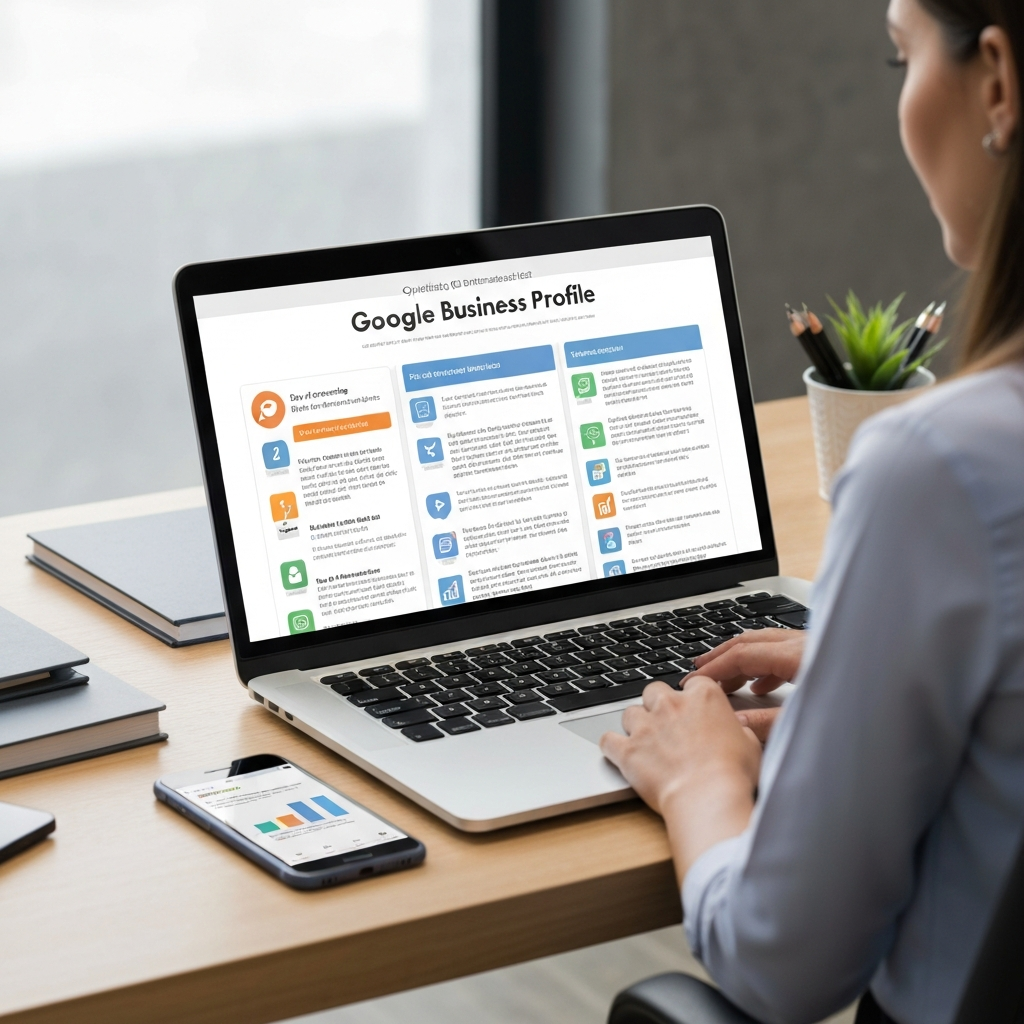
Think of your GBP listing not as a static directory entry, but as a dynamic, evolving profile that requires strategic management. The foundation rests on accuracy and completeness.
Nail Your Business Information (The NAP Foundation)
The absolute, non-negotiable starting point is your core business information. This is your Name, Address, and Phone number (NAP). Consistency here is paramount. Your NAP must be identical across your website, social media profiles, and any other online directories. Any discrepancy, no matter how minor—like using “St.” instead of “Street”—can confuse search engine crawlers and erode trust, negatively impacting your local rankings.
Beyond the NAP, your business categories are critical. You must select a primary category that most accurately represents your main service. Don’t stop there. Add as many relevant secondary categories as possible to capture a wider range of search queries. For instance, a restaurant’s primary category might be “Italian Restaurant,” with secondary categories like “Pizza Restaurant,” “Pasta Shop,” and “Outdoor Seating.”
Craft a Compelling Business Description
Your business description is your 750-character elevator pitch. This is your chance to tell potential customers who you are, what you do, and why you’re the best choice. Avoid keyword stuffing. Instead, write naturally and persuasively. Weave in what makes you unique—your unique selling propositions (USPs). Do you offer a special guarantee? Are you family-owned? Do you use sustainable materials? This is the place to highlight those differentiators.
Leverage High-Quality Photos and Videos
A profile without images is a missed opportunity of massive proportions. According to Google, businesses with photos in their profiles receive 42% more requests for driving directions and 35% more clicks to their websites than businesses that don’t. Visuals build trust and give customers a tangible sense of your business before they even visit.
Your photo strategy should include:
Exterior and Interior Shots: Show customers what to look for and what to expect inside.
Team Photos: Humanize your brand and build a personal connection.
Products & Services in Action: Showcase the quality of your work.
Behind-the-Scenes: Offer a glimpse into your process or company culture.
Regularly upload new, high-resolution images and videos. Geo-tagging your photos with your location coordinates before uploading can also provide an additional local signal to Google.
Advanced Strategies for Google Business Profile Optimization
Once the foundation is solid, it’s time to engage with the dynamic features that turn your profile into a customer-generating machine. These features signal to Google that you are an active, engaged business worthy of a top spot in the local pack.
Master Google Posts for Timely Engagement
Google Posts are micro-blogs that appear directly on your GBP listing in search results. They are perfect for announcing offers, sharing updates, highlighting new products, or promoting events. Each post has a clear call-to-action (CTA) button, such as “Learn More,” “Call Now,” or “Buy.”
The key to an effective Google Posts strategy is consistency. These posts typically have a limited lifespan, so maintaining a regular cadence of one to two posts per week keeps your profile looking fresh and active. It’s a powerful tool for driving immediate action from users who are already actively searching for what you offer.
Proactively Manage and Respond to Customer Reviews
Customer reviews are one of the most significant local search ranking factors, as confirmed by numerous industry studies. They provide the social proof that modern consumers demand. A steady stream of positive, recent reviews tells both Google and potential customers that you are a trusted, high-quality business.
Your job is twofold:
1. Encourage Reviews: Develop a simple, non-incentivized process for asking satisfied customers to leave a review. This can be a follow-up email, a QR code in your store, or a link on your website.
2. Respond to All Reviews: This is critical. Thank customers for positive reviews. For negative reviews, respond professionally and empathetically. Acknowledge the issue, take the conversation offline if necessary, and show that you are committed to customer satisfaction. How you handle criticism publicly can often win you more customers than a five-star review alone.
Utilize the Q&A Feature to Your Advantage
The Google Questions & Answers feature allows anyone to ask a question about your business, and anyone can answer it. This can be a double-edged sword. To control the narrative, you must be proactive.
Compile a list of your most frequently asked questions and post them on your profile yourself, then immediately answer them. This preemptively provides valuable information to potential customers and prevents misinformation from being posted by well-meaning but incorrect users. Monitor this section regularly to answer new questions promptly.
Measuring Success: What KPIs Matter?
Google provides a robust performance dashboard directly within your GBP manager. This isn’t just data for data’s sake; it’s a roadmap for what’s working. Pay close attention to:
Search Queries: See the exact terms customers are using to find you. This is invaluable for both SEO and content strategy.
Customer Actions: Track how many people clicked to your website, requested directions, or called your business directly from your listing.
* Discovery vs. Direct Searches: Understand how many users found you by searching for your business name (Direct) versus those who found you by searching for a category, product, or service you offer (Discovery). A high number of Discovery searches is a strong indicator of effective optimization.
Unlock Your Local Potential
Optimizing your Google Business Profile is a continuous process of refinement and engagement. It’s one of the highest-ROI marketing activities a local business can undertake, directly influencing your visibility, reputation, and, ultimately, your bottom line. By treating your profile as a primary marketing channel, you position your business to win the customers searching in your neighborhood.
If you’re ready to turn your local search presence into a strategic advantage but need an expert partner to guide the way, consult The Rank Raptor to discover how a comprehensive digital strategy can elevate your brand.