- Hotel Marketing Australia: Navigating a Competitive Landscape
- Beyond the OTAs: The Power of Direct Bookings
- Mastering Search: SEO for Australian Hotels
- Engaging Guests with a Smart Social Media Strategy
- The Data-Driven Approach to Marketing
- Your Blueprint for Marketing Success
Hotel Marketing Australia: Navigating a Competitive Landscape
Hotel marketing Australia faces a dynamic and fiercely competitive environment. With international travel rebounding and domestic tourism stronger than ever, simply having a great location and comfortable rooms is no longer enough. From boutique hotels in Melbourne’s laneways to sprawling resorts on the Gold Coast, visibility is the new currency. To capture bookings and build a sustainable brand, hoteliers must deploy a sophisticated, multi-channel marketing strategy that prioritizes direct connections with guests and stands out in a crowded digital marketplace.
Beyond the OTAs: The Power of Direct Bookings

Relying heavily on Online Travel Agencies (OTAs) like Booking.com or Expedia is a common pitfall. While they provide initial visibility, the commission fees—often ranging from 15% to 25%—significantly erode profit margins. The most profitable booking is a direct booking, and fostering that channel should be a cornerstone of your strategy.
The journey to more direct bookings begins and ends with your digital front door: your website. It must be more than an online brochure; it needs to be a high-performance booking engine. This means a mobile-first interface, lightning-fast load times, and a frictionless booking process that takes three steps, not ten. A professional and intuitive web design is critical here, as it builds trust and makes it easier for a potential guest to book with you than to click back to an OTA.
Furthermore, give travellers a compelling reason to book directly. Exclusive offers are your most powerful tool. This could be a complimentary breakfast, a free room upgrade, late checkout, or a welcome bottle of local wine. These value-adds often cost the hotel very little but create a powerful incentive that OTAs can’t match.
Mastering Search: SEO for Australian Hotels
Where do most travel journeys begin? On Google. A traveller looking for a weekend getaway isn’t browsing OTAs first; they’re searching for “boutique hotel Sydney,” “family-friendly resort Queensland,” or “winery accommodation Hunter Valley.” If your hotel doesn’t appear on the first page for these relevant searches, you are invisible to a massive pool of potential guests.
Local SEO is Non-Negotiable
For any accommodation provider, local search engine optimisation is paramount. Your Google Business Profile (GBP) is your most valuable local SEO asset. A fully optimised profile with high-quality, recent photos, a flood of positive reviews, accurate information, and regular posts acts as a digital billboard on Google Search and Maps. According to Google itself, customers are 70% more likely to visit businesses with a complete Business Profile.
Your content strategy must also have a distinctly local flavour. Create blog posts and landing pages that target your specific region and its attractions. If you’re a hotel in Cairns, write the definitive guide to exploring the Daintree Rainforest. If you’re in Adelaide, create content around the Barossa Valley or the Adelaide Fringe Festival. This positions you as a local expert, builds topical authority with search engines, and attracts highly qualified traffic.
Engaging Guests with a Smart Social Media Strategy
A successful social media presence for a hotel is about inspiration and connection, not just promotion. It’s about selling the experience, not just the room.
Visual platforms like Instagram and Facebook are essential for showcasing your property’s best features, the stunning local scenery, and the unique experiences guests can have. High-quality photography and video are non-negotiable. Think virtual tours, behind-the-scenes glimpses, and spotlights on your staff. For reaching a younger demographic, short-form video on TikTok and Instagram Reels can provide an authentic, unpolished view of the guest experience.
One of the most powerful tools in your arsenal is User-Generated Content (UGC). Encourage guests to tag your hotel and use a specific hashtag when posting about their stay. Reposting their best content provides authentic social proof that is far more convincing than any polished marketing campaign.
Beyond organic reach, paid social advertising allows for hyper-targeting. You can serve compelling ads to users based on their location, interests (e.g., “luxury travel,” “family holidays”), and even recent online behaviour, such as searching for flights to your city. This precision ensures your marketing budget is spent reaching people who are actively planning a trip.
The Data-Driven Approach to Marketing
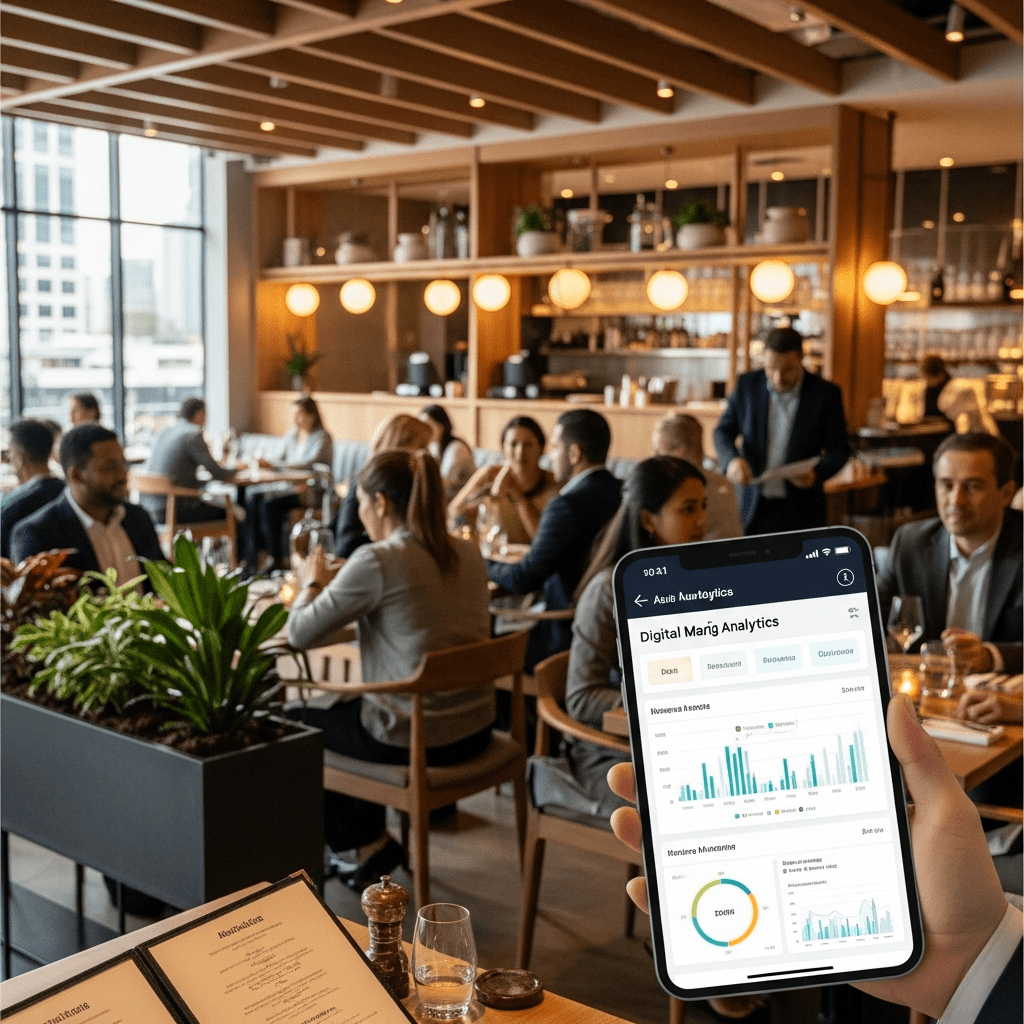
The most effective marketing strategies are not based on guesswork; they are informed by data. Understanding guest behaviour, booking patterns, and marketing performance is key to optimising your efforts and maximising your return on investment.
Email marketing remains a highly effective tool for nurturing relationships and driving repeat business. Segment your email list to send targeted messages. This includes pre-arrival emails with helpful local tips, post-stay surveys to gather feedback and reviews, and exclusive offers to entice past guests to return.
Active reputation management is also crucial. Monitor reviews across all platforms—Google, TripAdvisor, OTAs—and respond promptly and professionally to both positive and negative feedback. This not only shows prospective guests that you care but also provides invaluable insights into what you’re doing well and where you can improve.
Finally, stay attuned to broader industry trends. Reports from bodies like Tourism Australia provide critical data on travel patterns, source markets, and visitor spending. The post-pandemic surge in regional and domestic travel, for instance, created immense opportunities for properties outside the major capital cities. Aligning your marketing with these trends ensures you’re fishing where the fish are.
Your Blueprint for Marketing Success
Building a powerful marketing engine for your hotel involves integrating multiple moving parts: driving direct bookings, dominating local search, engaging on social media, and making data-informed decisions. It’s a complex ecosystem that demands a cohesive strategy and expert execution to cut through the noise and attract a steady stream of guests.
Navigating the complexities of digital marketing for your hotel can be overwhelming. To ensure your strategy is cohesive and delivers a strong return on investment, partnering with experts can provide the clarity and direction you need. If you’re ready to elevate your hotel’s online presence and boost your bottom line, consult the specialists at Rank Raptor for a tailored approach.