- How to start a podcast for beginners
- Step 1: Laying the Groundwork – Your Podcast Blueprint
- Define Your “Why” and Your Niche
- Choose Your Podcast Format
- Step 2: Gearing Up – The Essential Podcast Equipment
- The Microphone is Your Most Critical Investment
- Recording & Editing Software
- Step 3: From Recording to Reality – The Production Workflow
- Recording Your First Episode
- The Editing Process
- Creating Your Podcast Artwork and Branding
- Step 4: Launching and Distribution – Getting Your Podcast Heard
- Choosing a Podcast Hosting Platform
- Submitting to Directories
- Step 5: Growth and Promotion – Building Your Audience
- A Proven Plan for How to Start a Podcast for Beginners and Grow It
- Ready to Amplify Your Brand’s Voice?
How to start a podcast for beginners
Learning how to start a podcast for beginners is one of the most powerful moves a business can make to build authority and connect with a target audience on a deeper level. More than just a trend, podcasting has become a mainstream medium for content consumption. With over 100 million active podcast listeners in the United States alone, according to Statista, the opportunity to capture attention and build a loyal following has never been greater. The barrier to entry is surprisingly low, but the path to creating a high-impact show requires a clear, strategic plan.
Step 1: Laying the Groundwork – Your Podcast Blueprint
Before you even think about a microphone, you need a strategy. This foundational step is what separates podcasts that fade after a few episodes from those that become indispensable assets for a brand.
Define Your “Why” and Your Niche
First, ask the hard questions. Why are you starting this podcast? Is it to generate leads, establish thought leadership, build a community, or support existing customers? Your “why” will dictate your content, tone, and format.
Next, define your niche with surgical precision. “Business” is not a niche; it’s an ocean. “Actionable marketing strategies for early-stage SaaS founders” is a niche. A tightly defined focus allows you to attract a dedicated audience that sees your show as an essential resource, not just another option in their podcast app. Who is your ideal listener? What are their biggest challenges? Your podcast should be the answer to their questions.
Choose Your Podcast Format
The format is the structure of your show. Consistency here helps manage listener expectations and streamline your production process. Common formats include:
Solo/Monologue: You are the expert, delivering insights directly to your audience. This format is excellent for establishing authority but requires significant preparation and a dynamic delivery to remain engaging.
Interview: You host guests who bring expertise and their own audience to your show. This is a fantastic way to network and provide diverse perspectives, but it demands strong research and interviewing skills.
Co-hosted: Two or more hosts discuss topics, creating a dynamic and conversational feel. The chemistry between hosts is critical for this format to succeed.
Panel/Roundtable: A moderated discussion with multiple guests, often used for news analysis or debating complex topics. It can be incredibly insightful but is logistically complex to produce.
For businesses, a mix of solo and interview episodes often strikes the perfect balance between showcasing internal expertise and leveraging external authority.
Step 2: Gearing Up – The Essential Podcast Equipment
While you don’t need a professional recording studio, audio quality is non-negotiable. Listeners will forgive many things, but poor, distracting audio is not one of them.
The Microphone is Your Most Critical Investment
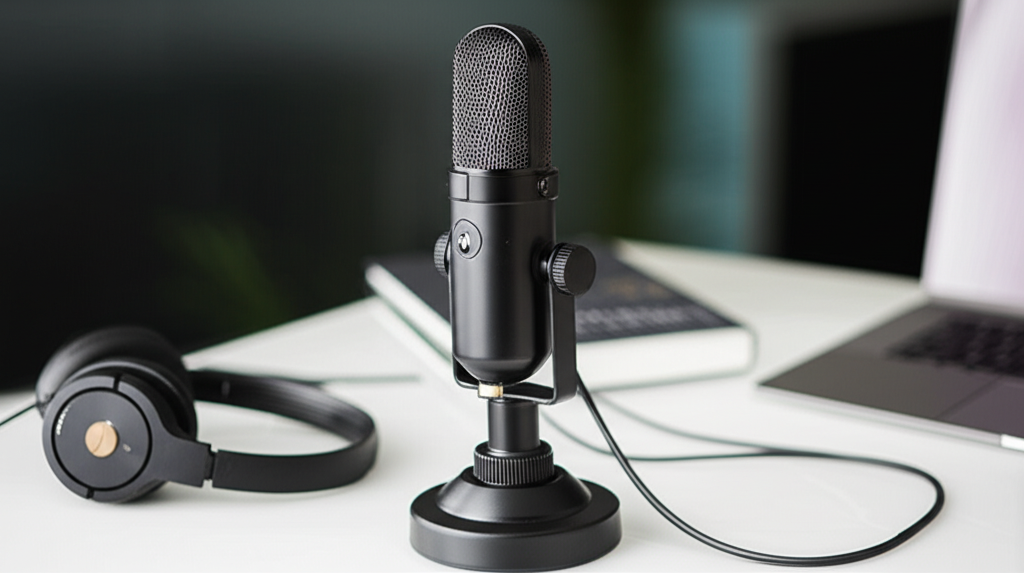
Your microphone is the single most important piece of gear you will buy. Forget using your laptop’s internal mic. A quality external microphone is essential.
USB Microphones: These are plug-and-play and perfect for beginners. The Blue Yeti and Audio-Technica AT2020 are industry standards for a reason—they deliver excellent quality for their price point.
XLR Microphones: These offer superior sound quality and flexibility but require an audio interface to connect to your computer. This is a great upgrade path but not necessary for day one.
Recording & Editing Software
You need software to capture your audio and edit it into a polished final product.
Free Options: Audacity is a powerful, open-source editor available for Mac and PC. For Mac users, GarageBand comes pre-installed and is incredibly user-friendly.
Paid/Subscription Options: For those looking for a more streamlined workflow, tools like Adobe Audition offer professional-grade features. Descript is a modern favorite, as it allows you to edit audio by simply editing a text transcript.
Step 3: From Recording to Reality – The Production Workflow
This is where your ideas become a tangible episode. A consistent workflow is key to producing content efficiently.
Recording Your First Episode
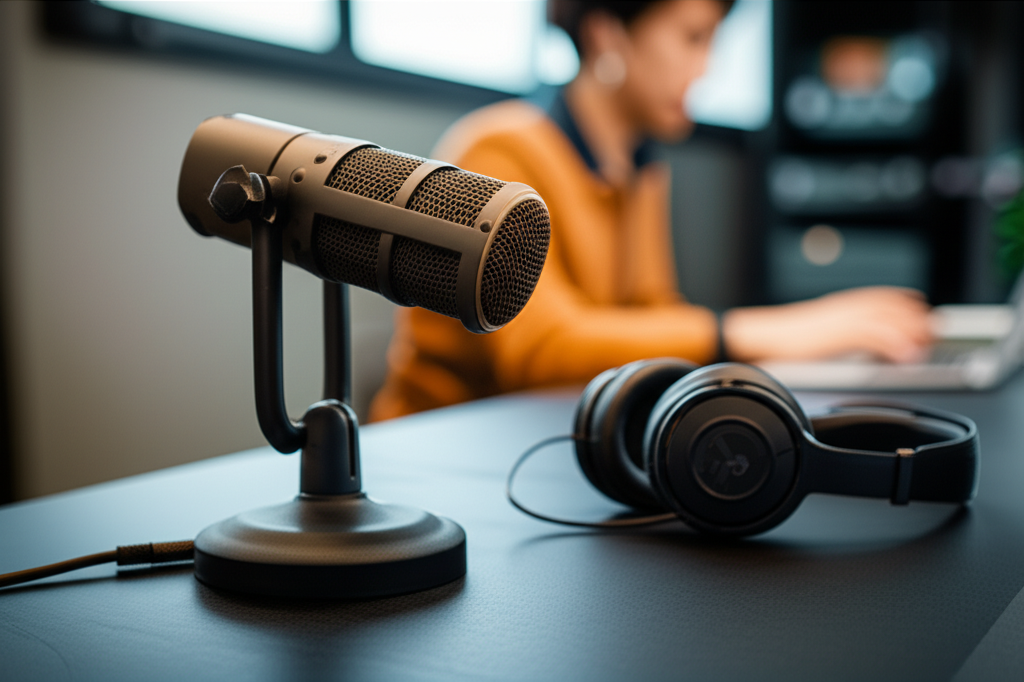
Find a quiet, small room with soft surfaces (like carpets, curtains, or a closet full of clothes) to minimize echo and reverb. Speak clearly and directly into the microphone, keeping a consistent distance. Use headphones to monitor your audio in real-time so you can catch issues like plosives (harsh “p” and “b” sounds) or background noise as they happen.
The Editing Process
Editing is where you clean up mistakes, remove long pauses, and add professional touches. The goal is not to sound robotic but to create a seamless listening experience. This typically involves:
1. Removing mistakes and filler words (“ums,” “ahs”).
2. Adding your intro and outro music.
3. Leveling the audio to ensure consistent volume throughout.
4. Exporting the final file as an MP3.
Creating Your Podcast Artwork and Branding
Your podcast cover art is your show’s first impression in a crowded directory. It needs to be clear, professional, and visually appealing, even as a small thumbnail. It should clearly display your show’s title and reflect your brand’s identity. Your podcast artwork is a crucial part of your brand’s digital storefront, much like your company’s website design, so investing in a professional design is highly recommended.
Step 4: Launching and Distribution – Getting Your Podcast Heard
Once you have a polished MP3 file, you need a way to get it to your listeners.
Choosing a Podcast Hosting Platform
You don’t upload your podcast directly to Spotify or Apple. You upload it to a media host, which stores your audio files and generates a unique RSS feed. This RSS feed is what you submit to the podcast directories. Reputable hosts like Libsyn, Buzzsprout, and Transistor provide reliable storage and valuable analytics on your listenership.
Submitting to Directories
Using the RSS feed from your host, you will submit your show to all the major podcast directories one time. The most important ones are Apple Podcasts, Spotify, and Google Podcasts. Once approved, any new episodes you upload to your host will automatically appear in these directories. Google provides a simple process for getting your show listed on its platform.
Step 5: Growth and Promotion – Building Your Audience
Recording a great podcast is only half the battle. Now, you need to get people to listen.
A Proven Plan for How to Start a Podcast for Beginners and Grow It
Promotion should be an ongoing part of your podcasting strategy, not an afterthought.
Leverage Your Owned Channels: Announce your podcast to your email list and social media followers. These are your warmest leads and will likely be your first listeners.
Create Shareable Assets: Turn key quotes or segments from your episodes into audiograms (static images with an audio wave) or short video clips for platforms like LinkedIn, Instagram, and X.
Encourage Ratings and Reviews: Social proof is powerful. Ask your listeners to leave a rating and review on Apple Podcasts, as this can help with visibility.
Collaborate and Cross-Promote: Be a guest on other podcasts in your niche. This is one of the most effective ways to get in front of an engaged, pre-built audience that is already interested in your topic.
Ready to Amplify Your Brand’s Voice?
Following this plan provides a clear roadmap for launching a podcast that serves as a powerful extension of your brand. The technical steps are straightforward, but true success lies in strategic execution—from defining your niche to integrating the podcast into your broader marketing ecosystem.
A well-produced podcast can become a cornerstone of your content strategy, building trust and authority in a way that few other mediums can. If you’re looking to build a comprehensive digital strategy that leverages powerful assets like a podcast to drive business growth, it’s often wise to partner with experts who understand the entire landscape. To explore how to make your brand’s voice heard, you can consult the team at Rank Raptor.