- The Quest to Increase Direct Hotel Bookings
- Laying the Foundation: Your Website is Your Digital Front Desk
- Mastering Local SEO: Own Your Neighborhood
- Content Strategy That Converts Lookers into Bookers
- A Smart Strategy to Increase Direct Hotel Bookings Beyond Standard SEO
- Measuring What Matters: Tracking Your Direct Booking Success
- Partnering for Profitability
The Quest to Increase Direct Hotel Bookings
The drive to increase direct hotel bookings is a defining challenge for modern hoteliers. For too long, the industry has leaned heavily on Online Travel Agencies (OTAs) like Booking.com and Expedia. While these platforms deliver volume, they do so at a steep cost, with commissions often ranging from 15% to as high as 30%. This reliance erodes profit margins and, more importantly, severs the direct relationship between a hotel and its guests. The key to reclaiming that revenue and customer ownership lies not in abandoning OTAs entirely, but in building a powerful, independent channel that makes booking directly the most attractive option. This is achieved through a sophisticated and relentless SEO strategy.
Laying the Foundation: Your Website is Your Digital Front Desk
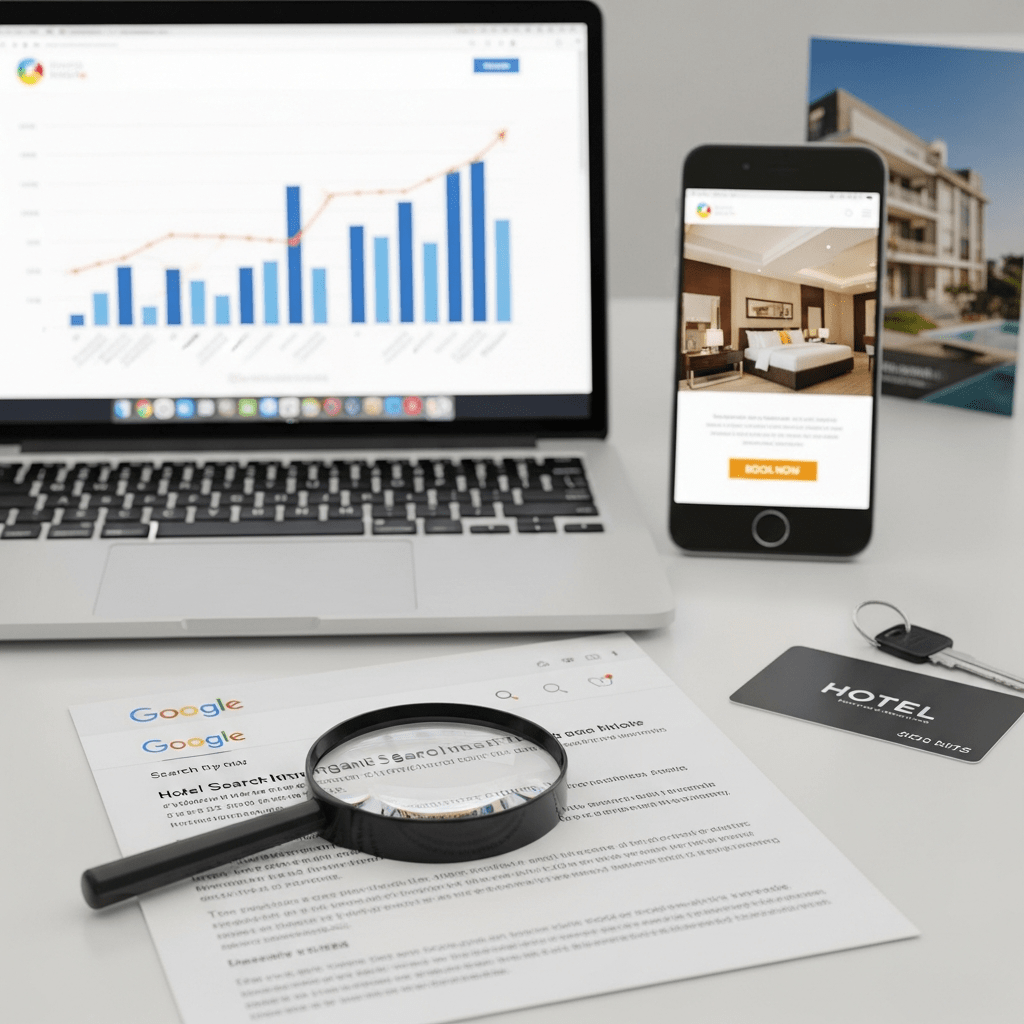
Before a potential guest ever steps into your lobby, they visit your digital front desk: your website. If this initial experience is slow, confusing, or visually unappealing, you’ve lost the booking before the conversation even started. A high-performance website is the non-negotiable bedrock of any direct booking strategy.
This begins with technical excellence. Your site must be lightning-fast, especially on mobile devices, where the majority of travel research now begins. Google’s mobile-first indexing means your mobile site isn’t just a secondary version; it’s the primary one in the eyes of the world’s largest search engine. A seamless user experience (UX) is equally critical. Navigation should be intuitive, guiding visitors effortlessly from exploring amenities to completing a reservation. The booking engine itself must be simple, secure, and transparent, with no hidden fees or confusing steps that cause abandonment. Investing in a professional and compelling web design is not an expense; it’s a direct investment in your profitability.
Mastering Local SEO: Own Your Neighborhood
For a hotel, search is inherently local. Travelers are looking for “hotels near the convention center,” “boutique hotel in downtown Austin,” or “pet-friendly lodging by the beach.” Winning these searches means dominating local SEO.
Your Google Business Profile (GBP) is your most powerful tool in this arena. It’s often the first impression a potential guest has of your property in search results and on Google Maps. A fully optimized profile—complete with high-resolution photos, up-to-date information, a complete list of amenities, and an active Q&A section—is essential.
Beyond GBP, consistency is key. Your hotel’s name, address, and phone number (NAP) must be identical across every online directory and citation. Inconsistencies can confuse search engines and erode trust. Most importantly, actively manage your online reputation. According to Statista, a significant percentage of travelers read reviews before making a booking decision. Encourage satisfied guests to leave reviews on Google, and respond professionally to all feedback, both positive and negative. This engagement signals to both customers and search engines that you are an active and attentive business.
Content Strategy That Converts Lookers into Bookers
Your website content needs to do more than just list room types and prices. It must sell an experience. A strategic content plan transforms your website from a simple brochure into a valuable resource for travelers, capturing their interest long before they are ready to book.
Think beyond your property’s walls. Create blog posts and guides centered on your location. What are the top 10 things to do in your city for a weekend? Where are the best local restaurants within walking distance? What does a perfect family-friendly itinerary look like? This type of content attracts potential visitors at the top of the sales funnel, establishing your hotel as a local authority.
Furthermore, create dedicated landing pages that speak to specific guest personas. A page targeting business travelers should highlight amenities like high-speed Wi-Fi, meeting spaces, and proximity to corporate hubs. A page for romantic getaways could focus on suites with views, spa packages, and in-room dining options. Pair this targeted content with stunning, professional photography and video tours that allow guests to visualize themselves at your property.
A Smart Strategy to Increase Direct Hotel Bookings Beyond Standard SEO
A truly winning strategy integrates SEO with other powerful digital tools to create a comprehensive direct booking ecosystem. One of the most effective methods is implementing Schema markup on your website. This structured data, as outlined by resources like Google’s own developer guides, helps search engines understand the specific details of your hotel. It can enable rich results in search, such as displaying room rates, availability, and review ratings directly on the search engine results page, making your listing far more compelling than a standard blue link.
This organic data can also inform your paid campaigns. Insights from your top-performing organic keywords can be used to build highly effective Google Hotel Ads campaigns, ensuring your property appears prominently when users are demonstrating high booking intent. The goal is to create a synergistic relationship where your organic presence builds brand authority and reduces long-term ad spend, while paid ads capture immediate demand.
Measuring What Matters: Tracking Your Direct Booking Success
You cannot improve what you do not measure. A robust analytics setup is crucial for understanding the effectiveness of your SEO efforts. Key performance indicators (KPIs) go far beyond simple website traffic. You must track:
Direct Booking Conversion Rate: The percentage of website visitors who complete a booking.
Traffic Sources: Differentiating between organic search, direct traffic, referrals, and paid channels.
Cost Per Acquisition (CPA): Calculating the true cost of acquiring a direct booking versus the commission paid to an OTA for that same booking.
Top Performing Pages: Identifying which content and landing pages are most effective at driving reservations.
By analyzing this data, you can make informed decisions, doubling down on what works and refining the elements of your strategy that are underperforming.
Partnering for Profitability
Shifting your reliance from commission-heavy OTAs to a profitable direct booking model is a marathon, not a sprint. It requires a deep understanding of technical SEO, local search dynamics, content marketing, and data analysis. This multi-layered approach is the only sustainable path to increasing your revenue per available room (RevPAR) and building lasting relationships with your guests.
Navigating the complexities of search engine algorithms and evolving digital marketing trends requires a dedicated partner with proven expertise. If you are ready to take control of your revenue stream and build a powerful direct booking engine, a strategic consultation can illuminate the path forward. To explore how a tailored SEO strategy can transform your hotel’s profitability, consult The Rank Raptor here.