- Shopify vs WooCommerce Pros and Cons: A Head-to-Head Breakdown
- Ease of Use: The Out-of-the-Box Experience
- Design and Customization: Flexibility vs. Simplicity
- Unpacking the Shopify vs WooCommerce Pros and Cons in Pricing
- Features and Scalability: Growing Your Empire
- SEO and Marketing Capabilities
- Support and Security: Who Has Your Back?
- The Final Verdict: Which Platform is Right for Your Business?
- Beyond the Platform: Your Strategy for Success
Shopify vs WooCommerce: The Essential Best Choice
Shopify vs WooCommerce Pros and Cons: A Head-to-Head Breakdown
The debate over Shopify vs WooCommerce pros and cons is a foundational crossroad for any entrepreneur looking to launch or scale an online store. These two platforms are the undisputed titans of the ecommerce world, powering millions of businesses globally. However, they represent fundamentally different philosophies. Shopify offers a streamlined, all-in-one solution designed for simplicity and speed, while WooCommerce provides an open-source, endlessly customizable toolkit for those who demand total control. The right choice isn’t about which platform is objectively “better,” but which is strategically aligned with your business model, technical comfort level, and long-term vision.
Ease of Use: The Out-of-the-Box Experience
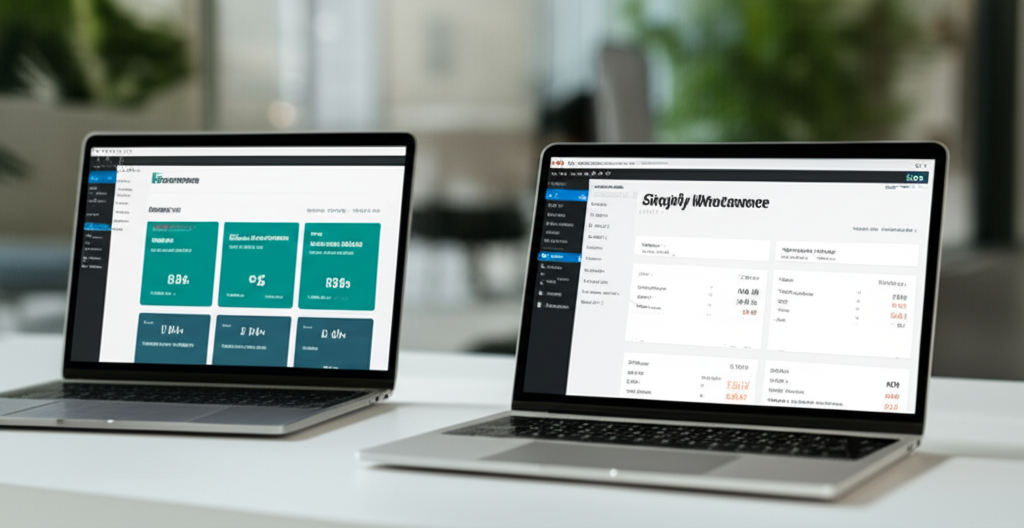
For business owners who want to get selling immediately with minimal technical friction, Shopify is the clear frontrunner. As a fully hosted, software-as-a-service (SaaS) platform, it handles all the backend complexities for you. There’s no need to worry about finding a hosting provider, managing server security, or dealing with software updates. The setup process is guided and intuitive, with a clean dashboard that makes adding products, managing orders, and tracking inventory straightforward from day one. It’s a closed ecosystem designed for one purpose: to make selling online as simple as possible.
WooCommerce, in contrast, operates on a different premise. It’s not a standalone platform but a powerful plugin for WordPress, the world’s most popular content management system. This means you must first have a WordPress website, which involves securing your own hosting and domain. While this offers immense freedom, it also introduces a steeper learning curve. You are responsible for installation, maintenance, security, and backups. For those already familiar with the WordPress environment, this is a minor hurdle. For complete beginners, it can feel like being handed a box of engine parts instead of a set of car keys.
Design and Customization: Flexibility vs. Simplicity
Your online storefront is your digital brand ambassador, and its design is critical. Here, the choice between platforms highlights a classic trade-off: curated simplicity versus limitless potential.
Shopify provides a polished experience with its own theme store, featuring a collection of professionally designed free and premium templates. These themes are mobile-responsive, aesthetically pleasing, and optimized for conversions. Customization is handled through an intuitive editor, allowing you to change colors, fonts, and layouts without touching a line of code. However, this simplicity comes with boundaries. Significant structural changes or unique functionalities often require hiring a developer proficient in Shopify’s proprietary coding language, Liquid.
WooCommerce, being open-source and built on WordPress, offers unparalleled freedom. You have access to thousands of themes from countless developers, and with page builders like Elementor or Divi, you can create virtually any design imaginable through drag-and-drop interfaces. If you can dream it, you can build it. This level of control is a massive advantage for brands with a distinct vision or complex design requirements. However, this creative freedom also means more responsibility. Poorly coded themes or an overabundance of plugins can slow down your site and create conflicts. Achieving a truly bespoke and high-performance storefront often requires professional expertise, a core focus of our custom web design services.
Unpacking the Shopify vs WooCommerce Pros and Cons in Pricing
Understanding the true cost of each platform is crucial, as their pricing models are fundamentally different.
Shopify’s pricing is transparent and predictable. It operates on a monthly subscription model with several tiers (e.g., Basic, Shopify, Advanced), each offering more advanced features. On top of the subscription, there are credit card processing fees. If you use Shopify Payments, their in-house gateway, you get competitive rates. If you use a third-party gateway like Stripe or PayPal, Shopify charges an additional transaction fee on each sale. While the all-in costs can add up, you know exactly what you’ll be paying each month.
WooCommerce is famously “free” to download and install, but this is a misnomer. The software itself costs nothing, but running a professional online store incurs several variable costs. You must pay for:
Web Hosting: Essential for any website, with costs ranging from a few dollars to hundreds per month depending on your traffic and performance needs.
Domain Name: Your website’s address, typically an annual fee.
Premium Themes & Plugins: While many free options exist, most serious stores invest in premium extensions for features like advanced shipping, subscriptions, or booking systems. These can be one-time purchases or annual licenses.
The total cost for WooCommerce can be lower than Shopify, especially at the start, but it’s less predictable and can escalate as you add more premium functionality.
Features and Scalability: Growing Your Empire
Both platforms are capable of supporting businesses from startup to enterprise, but they achieve scalability in different ways.
Shopify comes with a robust set of core commerce features built right in, including inventory management, discount codes, basic analytics, and multi-channel selling. For anything more, you turn to the Shopify App Store, a curated marketplace of third-party applications that can add any conceivable function. As your business grows, you can upgrade to Shopify Plus, their enterprise-level solution that handles massive traffic volumes and offers advanced APIs and dedicated support.
WooCommerce’s power lies in its extensibility. Its core functionality is lean, but you can bolt on any feature you need via its vast library of extensions. This a-la-carte approach means you only pay for what you use. Its dominance is clear; according to BuiltWith data, WooCommerce holds a significant share of the top ecommerce sites. However, scalability with WooCommerce is directly tied to the quality of your hosting. As your traffic increases, you’ll need to upgrade your hosting plan to maintain site speed and performance, placing the onus of technical management squarely on your shoulders.
SEO and Marketing Capabilities
In ecommerce, visibility is everything. A platform’s search engine optimization (SEO) capabilities can directly impact your bottom line.
Shopify provides a solid SEO foundation out of the box. It allows you to edit meta titles, descriptions, and image alt-text, and it automatically generates a sitemap. It also includes blogging functionality, which is essential for content marketing. The main limitation is a lack of full control over the URL structure, which can be a minor frustration for SEO purists.
WooCommerce, by virtue of running on WordPress, is an SEO powerhouse. WordPress was built for content and is inherently search-engine-friendly. When you add a dedicated SEO plugin like Yoast SEO or Rank Math, you gain granular control over every aspect of your on-page optimization, from schema markup to redirect management. This level of control gives WooCommerce a distinct edge for businesses that plan to compete heavily on organic search.
Support and Security: Who Has Your Back?
When something goes wrong with your online store, every minute of downtime costs you money. The support structures of Shopify and WooCommerce are worlds apart.
Shopify offers award-winning 24/7 support via phone, email, and live chat. This is a massive benefit, especially for non-technical users. You have a dedicated team of experts on call to help you resolve issues quickly. Shopify also handles all security updates, PCI compliance, and provides a free SSL certificate, taking a huge weight off your shoulders.
With WooCommerce, you are largely on your own. Support comes from community forums, extensive documentation, and tutorials. While the community is vast and helpful, there is no central support desk to call. For direct help, you’ll need to rely on your hosting provider or hire a WordPress developer. You are also responsible for your site’s security, which includes implementing an SSL certificate, running regular updates, and protecting against malware.
The Final Verdict: Which Platform is Right for Your Business?
The best choice is not universal; it’s personal to your business needs.
Choose Shopify if:
You prioritize speed to market and ease of use above all else.
You are not technically inclined and want 24/7 support.
You prefer a predictable, all-inclusive monthly fee.
You want a secure, hands-off solution that just works.
Choose WooCommerce if:
You want complete creative control and unlimited customization.
You are comfortable with the WordPress ecosystem or have a technical team.
You want to leverage advanced SEO and content marketing strategies.
* You want to avoid platform-imposed transaction fees and build a completely unique digital asset.
Beyond the Platform: Your Strategy for Success
Choosing between Shopify and WooCommerce is a critical first step, but the platform itself is just the foundation. True ecommerce success is built on a comprehensive strategy encompassing brilliant design, compelling user experience, and aggressive digital marketing. The most powerful tool is useless without a skilled operator.
If you’re ready to build a high-performance online store that not only functions flawlessly but also attracts, engages, and converts your target audience, then the conversation needs to go deeper than just platform selection. When you’re ready to build an ecommerce presence that drives tangible results, let’s discuss your project.