
- The Definitive Wine Club Marketing Strategy for Sustainable Growth
- Foundational Pillars: Understanding Your Ideal Member
- Crafting an Irresistible Value Proposition
- Digital Channels: Your Blueprint for Member Acquisition
- Search Engine Optimization (SEO) and Your Digital Cellar Door
- Targeted Social Media & Content Marketing
- The Power of Personalized Email Marketing
- The Retention Engine: A Wine Club Marketing Strategy for Loyalty
- Elevating the Member Experience
- Feedback Loops and Community Building
- Measuring What Matters: KPIs for Your Wine Club
- Partner with a Strategic Growth Expert
The Definitive Wine Club Marketing Strategy for Sustainable Growth
A wine club marketing strategy is the lifeblood of any modern winery aiming for sustainable, direct-to-consumer (DtC) success. In a market saturated with options, simply having excellent wine is no longer enough. The wineries that thrive are those that build a loyal community, create exclusive experiences, and master the art of member retention. This isn’t about sporadic promotions or a basic email newsletter; it’s about architecting a comprehensive blueprint that transforms casual buyers into passionate brand advocates and secures predictable, recurring revenue for your business.
The DtC channel has evolved dramatically. Consumers now expect personalized, seamless digital experiences that mirror the warmth and expertise of a visit to your tasting room. A robust strategy acknowledges this shift, focusing on the entire member lifecycle—from the first point of contact to long-term loyalty.
Foundational Pillars: Understanding Your Ideal Member
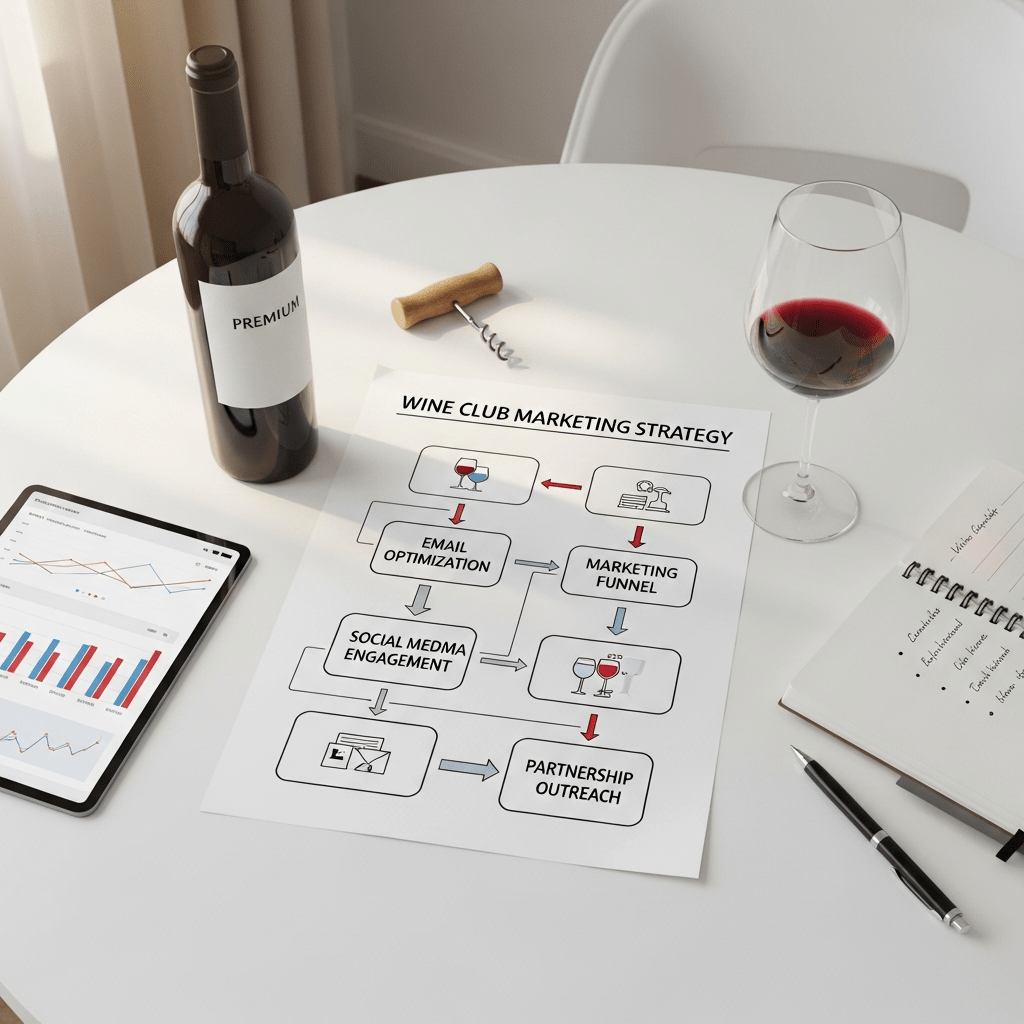
Before you can attract the right members, you must know precisely who they are. Moving beyond basic demographics like age and location is critical. You need to delve into their psychographics—their lifestyle, values, and relationship with wine.
Are you targeting the seasoned connoisseur who appreciates library vintages and detailed terroir maps, or the adventurous millennial looking for unique varietals and engaging social events? Create detailed member personas to bring these segments to life.
The Collector: Values rarity, exclusivity, and investment potential. They are motivated by access to limited-release wines and winemaker-signed bottles.
The Social Explorer: Seeks community and experiences. They are drawn to members-only parties, virtual tastings, and food-pairing events.
The Convenience Seeker: Appreciates curation and simplicity. They want expertly chosen wines delivered to their door without the hassle of decision-making.
Understanding these motivations allows you to tailor your messaging, benefits, and overall value proposition to resonate deeply with your target audience, making your club feel like it was designed just for them.
Crafting an Irresistible Value Proposition
Why should someone join your club over a competitor’s or simply buying from a retail store? Your value proposition is the answer, and it must extend far beyond a simple discount on wine. The most successful clubs sell a lifestyle and a sense of belonging.
Your proposition should be built on four key pillars:
1. Exclusivity: Offer things money can’t easily buy elsewhere. This includes members-only wines, early access to new releases, or verticals from your wine library. Exclusivity creates a powerful sense of being an insider.
2. Experience: Curate unique events that deepen the connection to your brand. Think harvest parties, blending seminars with the winemaker, or exclusive dinners at the vineyard. These experiences become cherished memories associated with your winery.
3. Convenience: Make membership effortless. Offer customizable shipments, easy online account management, and transparent communication about shipping dates. A frictionless experience is a cornerstone of modern luxury.
4. Community: Foster a tribe. Create a private Facebook group where members can share tasting notes, connect with each other, and interact directly with your team. When members feel part of a community, their loyalty skyrockets.
Digital Channels: Your Blueprint for Member Acquisition
Your digital presence is your global tasting room. A strategic approach to digital marketing is essential for attracting a steady stream of qualified leads.
Search Engine Optimization (SEO) and Your Digital Cellar Door
Your website is often the first interaction a potential member has with your winery. It must be more than a simple brochure; it needs to be a conversion-focused machine. A strong foundation in professional web design ensures your site is not only beautiful but also fast, mobile-friendly, and optimized for search engines. When users search for terms like “Napa Valley wine club” or “best pinot noir subscription,” your winery needs to appear. This involves optimizing your site’s content, structure, and local search signals to capture high-intent traffic.
Targeted Social Media & Content Marketing
Stop just posting bottle shots. Your social media should tell your story. Share behind-the-scenes content from the vineyard, introduce your cellar team, and create educational videos about food pairings or the winemaking process. Use high-quality visuals to stop the scroll.
Beyond organic content, leverage the powerful targeting capabilities of platforms like Instagram and Facebook. You can create ads that reach users based on their interests (e.g., wine, fine dining), behaviors (e.g., frequent online shoppers), and even their engagement with competitor wineries. Drive this traffic to a dedicated landing page that clearly outlines your club’s benefits and makes signing up simple.
The Power of Personalized Email Marketing
Email remains one of the most effective tools in a winery’s arsenal. According to a 2023 report by NielsenIQ, the DtC channel, heavily reliant on email, continues to be a vital revenue stream for wineries. Your goal is to nurture leads into members and members into lifelong fans. Segment your email list to send relevant content. A potential member who visited your tasting room should receive a different message than a five-year club veteran. Implement automated sequences like a welcome series for new subscribers, abandoned cart reminders for incomplete sign-ups, and re-engagement campaigns for lapsed members.
The Retention Engine: A Wine Club Marketing Strategy for Loyalty
Acquiring a new member can cost five times more than retaining an existing one. Therefore, a significant portion of your wine club marketing strategy must be dedicated to reducing churn and increasing member lifetime value.
Elevating the Member Experience
Once someone joins, the real work begins. Personalization is key. Use the data you have to customize their experience. Address them by name in emails, acknowledge their anniversary with the club, or recommend wines based on their past purchases.
Incorporate “surprise and delight” tactics. A handwritten thank-you note in their first shipment, an unexpected complimentary tasting pass for a friend, or a small branded gift can have an outsized impact on loyalty. These small gestures show you value their membership beyond the transaction.
Feedback Loops and Community Building
Actively solicit feedback through surveys after each shipment or event. Ask what they enjoyed and where you can improve. This not only provides invaluable insights but also makes members feel heard and valued. Use this feedback to evolve your offerings. If members are asking for more virtual events, create a program. If they want more flexibility in their shipments, explore new options. This collaborative approach builds a stronger, more resilient club.
Measuring What Matters: KPIs for Your Wine Club
To ensure your strategy is working, you must track the right key performance indicators (KPIs).
Member Acquisition Cost (MAC): How much does it cost in marketing and sales spend to acquire one new member?
Customer Lifetime Value (CLV): What is the total revenue you can expect from a single member over the duration of their membership? Your goal is for CLV to be significantly higher than MAC.
Churn Rate: What percentage of members cancel their subscription in a given period? A high churn rate is a red flag that your value proposition or member experience needs attention.
* Average Membership Length: How long, on average, does a member stay with your club? Increasing this metric is a direct path to higher profitability.
Partner with a Strategic Growth Expert
Developing and executing a sophisticated wine club marketing strategy requires a deep understanding of digital marketing, consumer psychology, and the unique nuances of the wine industry. It involves weaving together SEO, content creation, paid advertising, and retention marketing into a cohesive and powerful growth engine.
If you’re focused on crafting exceptional wine, navigating the complexities of digital marketing can feel overwhelming. Partnering with an agency that specializes in strategic growth can provide the clarity, expertise, and execution needed to elevate your brand and build a thriving wine club. A well-defined strategy isn’t an expense; it’s the most critical investment you can make in your winery’s future.
Ready to build a blueprint for sustainable growth? Consult with our strategy experts at Rank Raptor to unlock your winery’s full potential.